Color Separation is the process of taking a multi-colored digital image and breaking it down into individual layers or "channels," one for each ink or material color. It is necessary because most manufacturing machines (like screen printing presses or PVC injectors) can only apply one color at a time. Without a professional separation, your design cannot be translated into a physical product with accuracy.
Precision Technical Color Separation & Pre-Press
At High Rated Patch, we provide professional color separation services designed to bridge the gap between complex digital artwork and high-quality physical production. Whether you are preparing for screen printing, multi-color PVC molding, or high-fidelity textile printing, our process involves deconstructing your artwork into distinct, production-ready layers. We focus on chromatic accuracy and mechanical compatibility, ensuring that each color is isolated with surgical precision to guarantee vibrant, sharp, and cost-effective results.
Our color separation is not a simple automated split; it is a technical audit of your design. We analyze ink opacity, substrate color, and manufacturing constraints to create a layering strategy that maximizes visual impact while minimizing production complexity and "press time."

Strategic Layering & Underbase Engineering
The hallmark of a professional separation is the "Underbase." When printing on dark garments or substrates, we engineer a High-Opacity White Underbase that acts as a primer, ensuring that the top colors remain vibrant and true to their Pantone® references without being muted by the background material. By mathematically calculating the "choke" and "spread" of these layers, we eliminate alignment issues (registration errors), resulting in a flawless finished product.

Advanced Halftone & Process Logic
For designs containing gradients, shadows, or photographic elements, we utilize Advanced Halftone Screening. We convert continuous tones into a series of strategically sized dots, optimized for specific mesh counts or production resolutions. This allows us to replicate complex, multi-colored imagery using a limited number of physical ink stations or material colors, significantly reducing your manufacturing costs without sacrificing the integrity of the original art.
Technical Specifications & Features
Refine your brand assets with professional-grade file formats and design structures optimized for every industrial application.
- File Formats
- Design Features
AI (Adobe Illustrator)
The master source file. It preserves all live layers, paths, and metadata, serving as the primary blueprint for your brand’s future.
EPS (Encapsulated PostScript)
The universal production standard. Compatible with high-end industrial printers, vinyl cutters, and embroidery software.
SVG (Scalable Vector Graphics)
Optimized for the web. These files are lightweight and remain sharp at any zoom level on digital displays.
PDF (Vector-Embedded)
A universal, high-resolution viewing format that maintains all vector path data for easy sharing and proofing.
CDR (CorelDRAW)
Essential for many traditional manufacturing and embroidery setups globally, ensuring maximum software compatibility.
DXF/DWG
Specialized formats for CNC routing, laser cutting, and metal mold production—crucial for PVC and metal emblems.
PNG/TIFF (High-Res)
We also provide transparent, high-DPI raster exports for immediate use in presentations and social media.
Global Pantone® Swatch Assignment
We assign specific Pantone Solid Coated codes to your paths to ensure 100% color consistency between your screen and the physical product.
Layered Path Architecture
Artwork is logically organized into color-coded layers, facilitating easy separation for screen printing or PVC mold injection.
Typography Outlining
All fonts are converted into solid vector shapes, ensuring your branding remains intact even if the manufacturer does not have your specific font installed.
Line Weight Standardization
We ensure every line meets the 0.1mm minimum threshold required for physical production visibility.
Anchor Point Optimization
We manually reduce redundant nodes, creating "clean topology" that allows manufacturing machines to run faster and smoother.
Negative Space Auditing
We optimize the gaps between elements to ensure they are wide enough to be rendered clearly in stitches or molded plastic.
Showcase
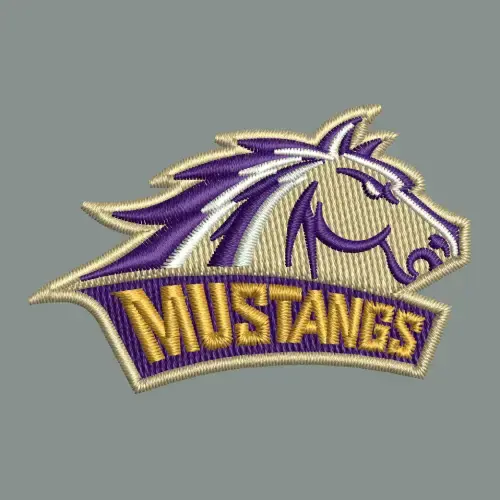
Recent Color Seperation Projects
Browse our latest technical illustration work to see how we transform low-resolution images into professional, production-ready brand assets.
FAQs
Have Any questions?
Find answers to the most common questions about our vector design process and why it is critical for your brand.
What exactly is Color Separation and why is it necessary?
What is the difference between Spot Color and Simulated
Process separation?
Spot Color is used for solid, vector-based designs with a limited number of flat colors. Simulated Process is used for complex, photographic, or highly detailed artwork on dark garments. It uses halftones and overlapping inks to "simulate" a full-color look using only a few screens, resulting in a soft-hand feel and high-definition detail.
Why do I need a "White Underbase" for my patches or
apparel?
If you print colors directly onto a dark fabric (like a black t-shirt or navy patch), the fabric will soak up the ink, making the colors look dull or muddy. A White Underbase is a solid layer of white ink printed first. It acts as a "canvas" so that the colors printed on top stay vibrant and look exactly like they do on your computer screen.
What are "Halftones" and how do they work in a separation?
Halftones are tiny dots of varying sizes used to create the illusion of different shades or gradients using a single solid color. For example, a 50% halftone of red will look like pink from a distance. This allows us to create complex shadows and 3D effects on a patch or garment without needing 50 different colors of thread or ink.
What is "Registration" and how do you prevent it from
being a problem?
Registration is the alignment of the different color layers on top of each other. If the layers are even slightly off, you will see gaps or overlapping edges. We prevent this by using Trapping and Choking—we slightly overlap the colors and shrink the underbase so that even if the machine shifts slightly, the design still looks perfect and gap-free.
Can you separate a flattened JPEG file?
Yes, but it requires Manual Channel Separation. Unlike a layered file where the colors are already separate, a JPEG is one flat layer. Our experts manually extract each color into its own channel, rebuilding the hidden data behind overlapping elements to ensure a clean, production-ready file.
How many colors should I use for a cost-effective design?
In manufacturing, every color usually adds a "setup fee" (a new screen or a new PVC mold). For the best balance of quality and cost, we recommend 3 to 6 colors. However, with our simulated process techniques, we can make 6 colors look like 20, giving you a high-end look at a lower production price.
What does "Pantone® Matching" mean for my order?
Pantone is a universal color language. Instead of telling a printer to use "Navy Blue," we give them a code like "Pantone 282 C." This ensures that the blue on your patch exactly matches the blue on your business cards and website, regardless of which factory in the world is doing the production.
Why do you need to know the "Mesh Count" or "Substrate
Type"?
Different materials require different separation techniques. Printing on a thick hoodie requires a different dot size (LPI) than printing on a smooth nylon patch. By knowing your production details, we customize the file's technical specs (like halftone frequency) so the ink doesn't "bleed" and the details stay sharp.
Do I get the layered source files after the separation is
done?
Yes. We provide you with the fully channelized PSD or layered AI file. These files are the property of your brand. You can take them to any manufacturer in the world, and they will have everything they need to start production immediately without any further editing or setup fees.
Call Us Now