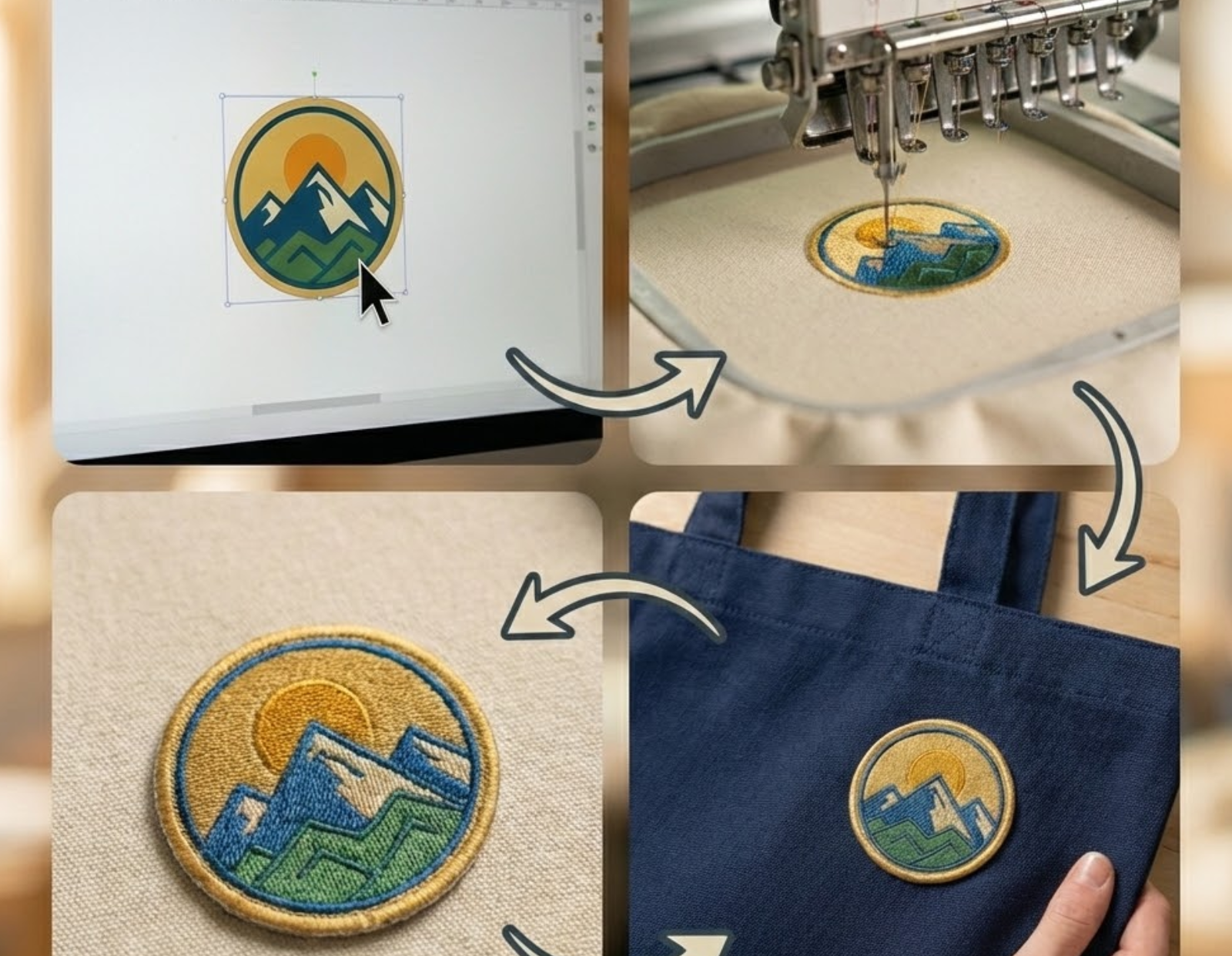
Embroidery machines do not understand pixels, colors, or JPEGs. They only understand X-Y coordinates and commands like "needle down" or "trim thread." Digitizing is the process of creating those coordinates. If you use an automated "converter," the machine will move erratically, break needles, and produce a messy, unusable result. Professional digitizing ensures the machine moves logically and efficiently.
Custom Digitizing
- Home
- Digitizing
- Custom Digitizing
Precision Stitch Engineering & Path Optimization
At High Rated Patch, we specialize in professional embroidery digitizing—the technical process of converting digital artwork into specialized machine instructions (stitch files). Unlike a simple image conversion, digitizing is a form of textile engineering. We manually map out every stitch, determining the exact path, sequence, and density required to translate your logo into a physical masterpiece of thread and fabric.
Our digitizers don't just "auto-trace"; we perform a Technical Fabric Audit for every design. We adjust the stitch logic based on the specific substrate—whether it’s heavy-duty denim, delicate performance polyester, or structured headwear—to ensure a flawless, "pucker-free" finish that maintains its structural integrity over time.

Push-and-Pull Compensation
A critical element of professional digitizing is managing the physical physics of thread. As a machine stitches, the thread naturally "pulls" the fabric inward and "pushes" it outward. At High Rated Patch, we utilize Advanced Compensation Logic, mathematically adjusting the digital boundaries of your logo to account for these forces. This ensures that when the machine finishes, your circles are perfectly round and your outlines align with 100% precision.

Path Efficiency & Run-Time Optimization
We focus on Clean Path Architecture to minimize thread breaks and "jump stitches." By engineering the most efficient movement for the embroidery head, we reduce production time and mechanical wear. This results in a smoother embroidery process, a cleaner "back" of the patch, and a significantly more durable final product that resists snagging and unraveling.
Technical Specifications & Features
Our digitizing service provides production-ready files optimized for all major industrial embroidery machine brands.
- File Formats
- Design Features
DST (Tajima)
The universal industry standard for industrial embroidery machines. It contains all stitch and jump data without proprietary color locks.
PES (Brother/Baby Lock)
The primary format for many multi-needle and home-professional machines.
EXP (Melco/Bernina)
A high-precision format used by Melco industrial systems, similar to DST but with specific scaling logic.
EMB (Wilcom Master File)
The "Source Code" of your design. It preserves all object properties, allowing for easy resizing and density adjustments.
VP3/HUS (Husqvarna/Viking)
Optimized for specific European machinery and high-end embroidery setups.
JEF (Janome)
A specialized format for Janome industrial and professional-grade systems.
PDF Production Worksheet
We provide a technical "spec sheet" including stitch counts, color sequences, and size dimensions for your production team.
Custom Density Calibration
We adjust the number of stitches per millimeter based on the thread weight and fabric type to prevent "birdnesting" or fabric show-through.
Underlay Strategy
We engineer "foundation stitches" (center run, zigzag, or tatami) to stabilize the fabric and provide a 3D lift to the top stitching.
Automated Trim Reduction
We manually sequence the design to eliminate unnecessary thread trims, resulting in a cleaner finish and faster machine run-times.
Small Text Optimization
We utilize specialized "micro-stitch" settings for lettering as small as 4mm to ensure legibility and needle safety.
Satin vs. Tatami Mapping
We strategically assign Satin stitches for borders and high-gloss areas, and Tatami (Fill) stitches for large surface areas to balance texture and weight.
Appliqué Pathing
For large patches, we provide specialized "tack-down" and "cover-stitch" paths to integrate fabric inserts with embroidery.
Showcase
Recent Custom Digitizing Projects
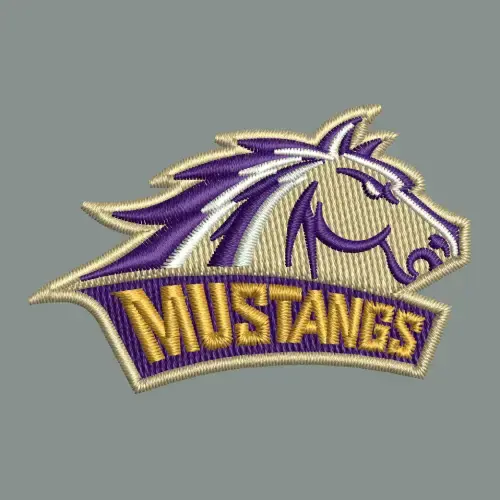
Browse our digitizing gallery to see the "Stitch Map" vs. the "Final Result," demonstrating the precision and texture we bring to every design.
FAQs
Have Any questions?
Find answers to the most common questions about the digitizing process and how it affects the quality of your custom patches.
What is Embroidery Digitizing and why can't I just use a
JPEG?
What is "Push-and-Pull" and how do you fix it?
Thread is a physical material that creates tension. When thousands of stitches are applied, they physically pull the fabric together. If a digitizer doesn't account for this, the final logo will look distorted or "skewed." We fix this by over-compensating in the digital file—making the design slightly wider in some areas and narrower in others so that it settles into the perfect shape once it’s actually stitched.
Why is the "Underlay" so important?
Think of the underlay as the foundation of a building. Before the pretty top-stitching is applied, the machine lays down a series of hidden stitches. This stabilizes the fabric, prevents the top stitches from sinking into the pile, and gives the patch its professional, "raised" 3D feel. A patch without a good underlay will look thin, wrinkled, and cheap.
Can you digitize very small text?
Yes, but there are physical limits. In embroidery, the smallest legible letter is typically about 4mm to 5mm tall. Anything smaller becomes a "blob" because the needle and thread have a physical thickness. When we digitize small text, we use specialized settings and "thin-thread" logic to ensure every letter remains sharp and readable.
What is the difference between a DST file and an EMB file?
A DST file is the "Output." It’s like a printed document; the machine can read it, but you can't easily change it. An EMB file is the "Master Source." It’s like the original Word document; it contains all the "intelligence" of the design, allowing us to change the stitch type, density, or size perfectly without losing quality. We recommend always keeping the EMB file for your records.
Does the stitch count affect the price of my patches?
Yes. In the embroidery world, time is money. A design with 20,000 stitches takes twice as long to run as one with 10,000 stitches. During the digitizing process, we optimize the design to use the minimum number of stitches required to achieve a premium look, saving you money on production without sacrificing quality.
How do you digitize for different fabrics like hats vs.
shirts?
A hat is curved and "structured," while a t-shirt is flat and "stretchy." A file digitized for a shirt will likely "pucker" or misalign on a hat. We digitize "Center-Out" and "Bottom-Up" for hats to push the fabric away from the center and maintain the hat's shape. Always tell us what the design is for so we can engineer the file correctly.
Can I resize a digitized file myself?
We do not recommend resizing a DST file by more than 10%. Since the number of stitches is fixed, making it larger will leave gaps, and making it smaller will cram too many stitches into a small area, breaking needles. If you need a different size, we use the master EMB file to "re-generate" the stitches so the density remains perfect at any scale.
What is "Pathing" and why does it matter?
Pathing is the sequence in which the design is stitched. Poor pathing results in "jump threads" (long strands of thread crossing the design) that have to be trimmed by hand. Professional pathing ensures the machine moves smoothly from one object to the next, hiding transitions and creating a clean, retail-ready finish.
Do I own the digitizing files after the job is done?
Yes. At High Rated Patch, you own your files. We provide you with the production DST file and, upon request, the master EMB file. This gives you the freedom to take your design to any embroidery shop in the world, though we’re confident our quality will keep you coming back to us!
Call Us Now